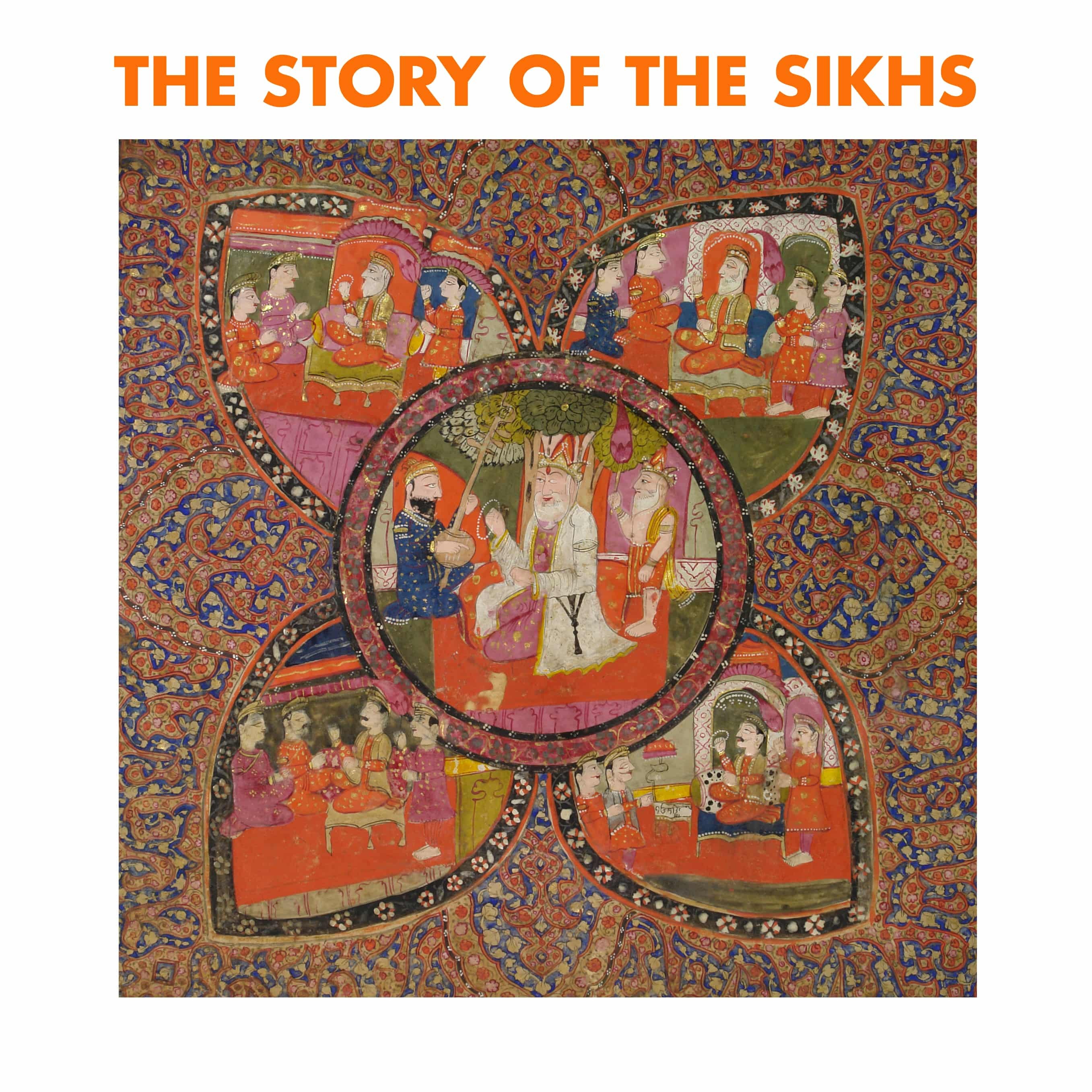
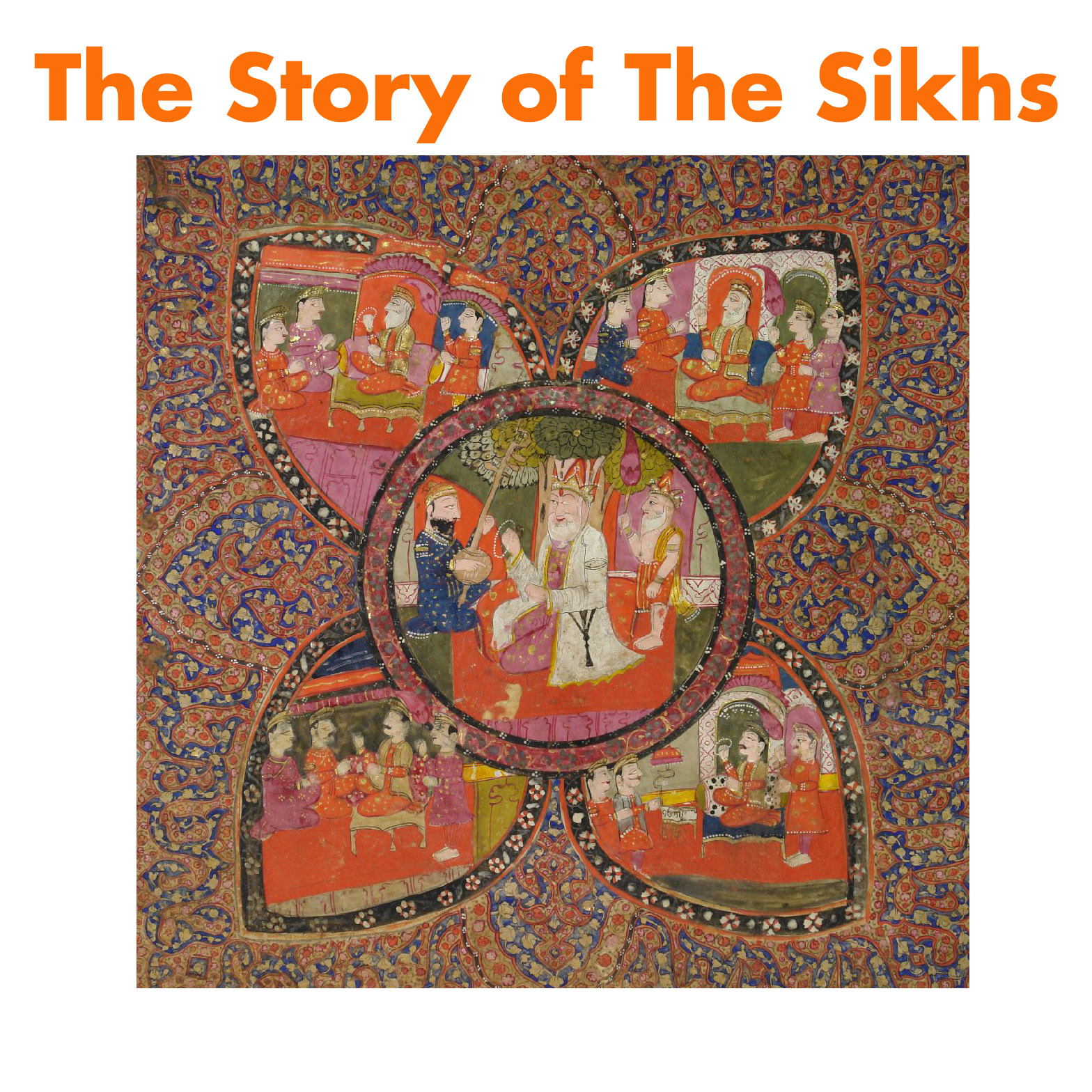
As Babar, the founder of the Mughal dynasty overruns northern India, he encounters a holy man who fearlessly confronts him and chides him for his cruelty. The name of the holy man is Guru Nanak, who is on the path to establishing a new world religion, Sikhism. The story shifts to the childhood of young Nanak, a precocious lad of spiritual bent who fearlessly challenges inequality and superstition. As a young man Nanak lays the foundation of an important institution that will go on to define the faith he is to create. Nanak has a spiritual epiphany that gives him a sense of mission and inspires him to set forth on a journey that is the start of a social revolution.
As Babar, the founder of the Mughal dynasty overruns northern India, he encounters a holy man who fearlessly confronts him and chides him for his cruelty. The name of the holy man is Guru Nanak, who is on the path to establishing a new world religion, Sikhism. The story shifts to the childhood of young Nanak, a precocious lad of spiritual bent who fearlessly challenges inequality and superstition. As a young man Nanak lays the foundation of an important institution that will go on to define the faith he is to create. Nanak has a spiritual epiphany that gives him a sense of mission and inspires him to set forth on a journey that is the start of a social revolution.
With his faithful companion, Mardana the minstrel in tow, Nanak sets out on a series of journeys that will last for decades and will bring him to wondrous places as he develops bold new ideas and creates the institutions which will ensure their propagation and survival. Nanak fearlessly confronts superstition and ritualism as he travels to the storied places of worship of his time.
With his faithful companion, Mardana the minstrel in tow, Nanak sets out on a series of journeys that will last for decades and will bring him to wondrous places as he develops bold new ideas and creates the institutions which will ensure their propagation and survival. Nanak fearlessly confronts superstition and ritualism as he travels to the storied places of worship of his time.
Nanak travels to the far reaches of the Eastern Himalayas, where he is hailed as Nanak Rimpoche, an emanation of the Buddhist sage Padmasambhava, the patron saint of Sikkim. After his return to his homeland, he dons the garb of a Muslim pilgrim and sets out on the ancient Indo-Egyptian trade route to journey to Mecca. This will be his last great journey and on his return he will establish the town of Kartarpur.
Nanak travels to the far reaches of the Eastern Himalayas, where he is hailed as Nanak Rimpoche, an emanation of the Buddhist sage Padmasambhava, the patron saint of Sikkim. After his return to his homeland, he dons the garb of a Muslim pilgrim and sets out on the ancient Indo-Egyptian trade route to journey to Mecca. This will be his last great journey and on his return he will establish the town of Kartarpur.
Guru Nanak settles down in Kartarpur, initiating a period of institutional development that will last for almost two centuries. The task of giving shape to a new world religion has begun. As the time approaches for Guru Nanak to depart, he anoints one of his beloved followers, Angad as the next Guru, ensuring that the fledgling faith he has created will survive and thrive.
Guru Nanak settles down in Kartarpur, initiating a period of institutional development that will last for almost two centuries. The task of giving shape to a new world religion has begun. As the time approaches for Guru Nanak to depart, he anoints one of his beloved followers, Angad as the next Guru, ensuring that the fledgling faith he has created will survive and thrive.
Guru Angad nurtures the faith that his late master entrusted him with, giving the gift of music to his followers and creating a new script for the preservation of the sacred writings of the Sikhs. In the tradition of Guru Nanak, he chooses Amardas, his humblest and most faithful disciple to succeed him as the next Guru, bypassing his own sons.
Guru Angad nurtures the faith that his late master entrusted him with, giving the gift of music to his followers and creating a new script for the preservation of the sacred writings of the Sikhs. In the tradition of Guru Nanak, he chooses Amardas, his humblest and most faithful disciple to succeed him as the next Guru, bypassing his own sons.
Guru Amardas receives the Mughal Emperor Akbar who humbly seeks his blessings. Finding his son-in-law, Ramdas to be loyal, humble and worthy, Guru Amardas decides to anoint him as the next Guru. Pleased with the devotion of his daughter, Bibi Bhani, Guru Amardas makes a prophecy which will have far reaching consequences for the faith.
Guru Amardas receives the Mughal Emperor Akbar who humbly seeks his blessings. Finding his son-in-law, Ramdas to be loyal, humble and worthy, Guru Amardas decides to anoint him as the next Guru. Pleased with the devotion of his daughter, Bibi Bhani, Guru Amardas makes a prophecy which will have far reaching consequences for the faith.
Guru Ramdas establishes Ramdaspur, which will go on to become Amritsar, the greatest center of the Sikh faith. Guru Ramdas is plagued by the ill-will that his oldest son, Prithi Chand harbors towards Arjan, his youngest. Because of his faithfulness and devotion, Arjan is exalted to succeed his father as Guru, much to his older brother’s chagrin.
Guru Ramdas establishes Ramdaspur, which will go on to become Amritsar, the greatest center of the Sikh faith. Guru Ramdas is plagued by the ill-will that his oldest son, Prithi Chand harbors towards Arjan, his youngest. Because of his faithfulness and devotion, Arjan is exalted to succeed his father as Guru, much to his older brother’s chagrin.
Guru Arjan establishes the Har Mandar Sahib, popularly known as The Golden Temple, which will become the most prominent place of worship for the Sikh faith and a symbol of its endurance. The Guru’s wife, Mata Ganga, distraught at being childless is sent to seek the blessing of Bhai Buddha, a venerable old Sikh, who has served the faith from the time of Guru Nanak.
Guru Arjan establishes the Har Mandar Sahib, popularly known as The Golden Temple, which will become the most prominent place of worship for the Sikh faith and a symbol of its endurance. The Guru’s wife, Mata Ganga, distraught at being childless is sent to seek the blessing of Bhai Buddha, a venerable old Sikh, who has served the faith from the time of Guru Nanak.
Guru Arjan, in his crowning achievement, creates the Guru Granth Sahib, the egalitarian scripture of the Sikhs, with contributions from the Sikh Gurus as well as enlightened souls from other faiths. Prithi Chand tries to convince the Emperor Akbar that Guru Arjan’s new scripture is blasphemous and disrespectful of Islam and Hinduism.
Guru Arjan, in his crowning achievement, creates the Guru Granth Sahib, the egalitarian scripture of the Sikhs, with contributions from the Sikh Gurus as well as enlightened souls from other faiths. Prithi Chand tries to convince the Emperor Akbar that Guru Arjan’s new scripture is blasphemous and disrespectful of Islam and Hinduism.
From the tragic martyrdom of Guru Arjan rises a great institution that will forever define the character of Sikhs and Sikhism. The poignant story of Guru Arjan and his beloved disciple the Sufi saint Miyan Mir.
From the tragic martyrdom of Guru Arjan rises a great institution that will forever define the character of Sikhs and Sikhism. The poignant story of Guru Arjan and his beloved disciple the Sufi saint Miyan Mir.
Our very distinctive title music is an excerpt from a shabad or hymn, sung by the Bhai Avtar Singh, one of the most distinguished Sikh Ragis or minstrels of modern times. In this bonus episode of The Story of the Sikhs Sarbpreet Singh reminisces about the legend who touched so many hearts through his beautiful music and the extraordinary warmth of his personality.
Our very distinctive title music is an excerpt from a shabad or hymn, sung by the Bhai Avtar Singh, one of the most distinguished Sikh Ragis or minstrels of modern times. In this bonus episode of The Story of the Sikhs Sarbpreet Singh reminisces about the legend who touched so many hearts through his beautiful music and the extraordinary warmth of his personality.
During the holy month of Ramadan a group of Muslims embody the values of the Sikh faith with a breathtaking act of solidarity and compassion.
During the holy month of Ramadan a group of Muslims embody the values of the Sikh faith with a breathtaking act of solidarity and compassion.
The Guru's Huqm or word, provides comfort on a difficult day.
The Guru's Huqm or word, provides comfort on a difficult day.
A musical feast that examines the singing of Raga Basant and other melodies of the spring in the Sikh Sacred Music tradition.
A musical feast that examines the singing of Raga Basant and other melodies of the spring in the Sikh Sacred Music tradition.
A sneak preview of Season 2
A sneak preview of Season 2
A reflection on the Christchurch mosque attacks
A reflection on the Christchurch mosque attacks
The Camel Merchant of Philadelphia is writer/narrator Sarbpreet Singh's new book about the court of Maharajah Ranjit Singh. This episode is about the book and his recent tour of India.
The Camel Merchant of Philadelphia is writer/narrator Sarbpreet Singh's new book about the court of Maharajah Ranjit Singh. This episode is about the book and his recent tour of India.
Hargobind, the young son of the late Guru Arjan ascends to the throne of Guru Nanak. His Sikhs are startled when he sets the traditional appurtenances of his station aside and dons twin swords. He creates the Akal Bunga which will go on to become an enduring symbol of Sikh sovereignty. The Guru is imprisoned by the Emperor Jahangir in Gwalior fort, from where he triumphantly emerges after freeing 52 kings, also held captive by the emperor.
Hargobind, the young son of the late Guru Arjan ascends to the throne of Guru Nanak. His Sikhs are startled when he sets the traditional appurtenances of his station aside and dons twin swords. He creates the Akal Bunga which will go on to become an enduring symbol of Sikh sovereignty. The Guru is imprisoned by the Emperor Jahangir in Gwalior fort, from where he triumphantly emerges after freeing 52 kings, also held captive by the emperor.
The Guru returns to Amritsar after his exile in Gwalior and his family grows and flourishes. One of his young sons, Atal Rai, learns a difficult lesson about deference to the will of the divine.
The Guru returns to Amritsar after his exile in Gwalior and his family grows and flourishes. One of his young sons, Atal Rai, learns a difficult lesson about deference to the will of the divine.
The Guru nurtures a young Pathan named Painde Khan, a formidable warrior who becomes one of his favorites. There is a sharp confrontation between the Sikhs and the entourage of the Emperor Shah Jahan, when the Sikhs seize a magnificent hawk belonging to the Emperor. The Guru makes a rousing declaration of sovereignty, which leads to the first armed confrontation between the Sikhs and the Mughals. A disaffected Painde Khan switches sides.
The Guru nurtures a young Pathan named Painde Khan, a formidable warrior who becomes one of his favorites. There is a sharp confrontation between the Sikhs and the entourage of the Emperor Shah Jahan, when the Sikhs seize a magnificent hawk belonging to the Emperor. The Guru makes a rousing declaration of sovereignty, which leads to the first armed confrontation between the Sikhs and the Mughals. A disaffected Painde Khan switches sides.
Gur Hargobind names his young grandson, Har Rai successor, but his oldest grandson Dhir Mal rebels against him. The Guru’s family is once roiled by dissent and treachery. The seventh Guru, Har Rai attracts the attention of the Mughal court and sends his son Ram Rai there as his representative, only to be disappointed by his perfidy. His younger son, Harkrishan succeeds him, but dies young, enigmatically signaling his successor’s whereabouts on his death bed.
Gur Hargobind names his young grandson, Har Rai successor, but his oldest grandson Dhir Mal rebels against him. The Guru’s family is once roiled by dissent and treachery. The seventh Guru, Har Rai attracts the attention of the Mughal court and sends his son Ram Rai there as his representative, only to be disappointed by his perfidy. His younger son, Harkrishan succeeds him, but dies young, enigmatically signaling his successor’s whereabouts on his death bed.
Tegh Bahadur, the youngest son of the late Guru Hargobind, is anointed the ninth Guru of the Sikhs in the face of competing claims by multiple pretenders to the throne of Guru Nanak. The Guru boldly confronts the Mughal emperor Aurangzeb who has been forcing his non-Muslim subjects to convert to Islam on the pain of death.
Tegh Bahadur, the youngest son of the late Guru Hargobind, is anointed the ninth Guru of the Sikhs in the face of competing claims by multiple pretenders to the throne of Guru Nanak. The Guru boldly confronts the Mughal emperor Aurangzeb who has been forcing his non-Muslim subjects to convert to Islam on the pain of death.
The young Guru Gobind Rai reflects upon the martyrdom of his father, Guru Tegh Bahadur. The lad prepares himself to meet his destiny and realize the grand vision of Guru Nanak. He is tested by powerful kings who surround him, driven to jealousy by his increasing power and fame.
The young Guru Gobind Rai reflects upon the martyrdom of his father, Guru Tegh Bahadur. The lad prepares himself to meet his destiny and realize the grand vision of Guru Nanak. He is tested by powerful kings who surround him, driven to jealousy by his increasing power and fame.
Guru Gobind Rai sets up a magnificent court that is the catalyst of a renaissance in poetry, music and scholarship. He himself composes sublime poetry and his court is studded with accomplished poets, musicians and scholars.
Guru Gobind Rai sets up a magnificent court that is the catalyst of a renaissance in poetry, music and scholarship. He himself composes sublime poetry and his court is studded with accomplished poets, musicians and scholars.
The Dasam Granth, the book of the tenth master is completed. In addition to the devotional writings of Guru Gobind Singh, it contains translations of heroic Hindu epics from Sanskrit to Braj, designed to inspire a population beaten down by centuries of oppression.
The Dasam Granth, the book of the tenth master is completed. In addition to the devotional writings of Guru Gobind Singh, it contains translations of heroic Hindu epics from Sanskrit to Braj, designed to inspire a population beaten down by centuries of oppression.
An extended version of Episode 18 The Dasam Granth. It has complete recordings of all the shabads referenced and is a feast for lovers of Gurmat Sangeet (Sikh Sacred Music)
An extended version of Episode 18 The Dasam Granth. It has complete recordings of all the shabads referenced and is a feast for lovers of Gurmat Sangeet (Sikh Sacred Music)
Guru Gobind Singh completes his divine mission by creating the Khalsa. At a gathering in Anandpur on the momentous Vaisakhi of 1699 the vision of Guru Nanak is fully realized as Guru Gobind Singh puts a final seal on the egalitarian faith that was created by the first Guru.
Guru Gobind Singh completes his divine mission by creating the Khalsa. At a gathering in Anandpur on the momentous Vaisakhi of 1699 the vision of Guru Nanak is fully realized as Guru Gobind Singh puts a final seal on the egalitarian faith that was created by the first Guru.
In a time treachery and deceit Guru Gobind Singh leads his Sikhs and his family out of the fortified city of Anandpur, where disaster strikes.
In a time treachery and deceit Guru Gobind Singh leads his Sikhs and his family out of the fortified city of Anandpur, where disaster strikes.
The sanctuary of the Guru's word in a time of fear and anxiety. Tweet your favorite shabad @sarbpreetsingh to be featured on a subsequent episode.
The sanctuary of the Guru's word in a time of fear and anxiety. Tweet your favorite shabad @sarbpreetsingh to be featured on a subsequent episode.
Bhagat Kabir 's beautiful relationship with God. Tweet your favorite shabad @sarbpreetsingh to be included in future episodes
Bhagat Kabir 's beautiful relationship with God. Tweet your favorite shabad @sarbpreetsingh to be included in future episodes
Rogan Te Ar Sogan Te Jal Jogan Te Bahu Bhant Bachavat - A soulful quatrain of praise in Raga Malkauns
Rogan Te Ar Sogan Te Jal Jogan Te Bahu Bhant Bachavat - A soulful quatrain of praise in Raga Malkauns
A translation and four fabulous renditions of the Savaiyya, Jagat Jot Jape Nis Basur, which is a succinct and elegant definition of the Khalsa
A translation and four fabulous renditions of the Savaiyya, Jagat Jot Jape Nis Basur, which is a succinct and elegant definition of the Khalsa
The Jaap Sahib of Guru Gobind Singh Ji in translation Part 1
The Jaap Sahib of Guru Gobind Singh Ji in translation Part 1
The Jaap Sahib of Guru Gobind Singh Ji in translation Part 2
The Jaap Sahib of Guru Gobind Singh Ji in translation Part 2
Why Black Lives Matter to Sikhs
Why Black Lives Matter to Sikhs
Recitation and English translation of the Jaap Shib (continued)
Recitation and English translation of the Jaap Shib (continued)
A musical feast of shabads in various forms of Raga Malhar
A musical feast of shabads in various forms of Raga Malhar
Guru Gobind Singh, traveling South, meets a powerful sorcerer on the banks of the Godavari. The sorcerer, transformed by the encounter, becomes a beloved disciple of the Guru's and is given a mission.
Guru Gobind Singh, traveling South, meets a powerful sorcerer on the banks of the Godavari. The sorcerer, transformed by the encounter, becomes a beloved disciple of the Guru's and is given a mission.
Guru Gobind Singh’s chosen deputy, the former sorcerer Banda Singh Bahadur has managed to amass an army, He is ready to bring Nawab Wazir Khan, who mercilessly murdered the Guru’s younger sons to justice.
Guru Gobind Singh’s chosen deputy, the former sorcerer Banda Singh Bahadur has managed to amass an army, He is ready to bring Nawab Wazir Khan, who mercilessly murdered the Guru’s younger sons to justice.
The might of the Mughal Empire descends on the Sikhs and a fierce battle is fought at Lohgarh. Banda Bahadur manages to escape but is besieged by powerful Mughal commanders at Gurdas Nangal, where he fights his last battle.
The might of the Mughal Empire descends on the Sikhs and a fierce battle is fought at Lohgarh. Banda Bahadur manages to escape but is besieged by powerful Mughal commanders at Gurdas Nangal, where he fights his last battle.
Banda Singh Bahadur’s rebellion is over and Lahore is the hands of an oppressive ruler intent on destroying the Sikhs. It is a time when men who can ride, lead and wield a sword might make a reputation for themselves.
Banda Singh Bahadur’s rebellion is over and Lahore is the hands of an oppressive ruler intent on destroying the Sikhs. It is a time when men who can ride, lead and wield a sword might make a reputation for themselves.
Nawab Zakriya Khan of Lahore decides to extend an olive branch to the Sikhs. An emissary is sent with a title and land and the Sikhs get their own Nawab.
Nawab Zakriya Khan of Lahore decides to extend an olive branch to the Sikhs. An emissary is sent with a title and land and the Sikhs get their own Nawab.
The respite for the Sikhs is very brief. Once again Nawab Zakriya Khan unleashes a reign of terror and new heroes rise in the face of terrible oppression.
The respite for the Sikhs is very brief. Once again Nawab Zakriya Khan unleashes a reign of terror and new heroes rise in the face of terrible oppression.
A new threat approaches from the West, which threatens the Mughal Empire and creates an opportunity for the Sikhs.
A new threat approaches from the West, which threatens the Mughal Empire and creates an opportunity for the Sikhs.
Bhai Taru Singh is tortured and put to death by Zakriya Khan. Thousands of Sikhs are slain by his deputy Lakhpat Rai. A new king, who will cast a long shadow on the homeland of the Sikhs, rises in the west.
Bhai Taru Singh is tortured and put to death by Zakriya Khan. Thousands of Sikhs are slain by his deputy Lakhpat Rai. A new king, who will cast a long shadow on the homeland of the Sikhs, rises in the west.
Mir Mannu, who takes command of Lahore, views the Sikhs as a threat. Ahmed Shah Abdali, returns to avenge his defeat. The Sikhs start growing in power as the Punjab stays turbulent
Mir Mannu, who takes command of Lahore, views the Sikhs as a threat. Ahmed Shah Abdali, returns to avenge his defeat. The Sikhs start growing in power as the Punjab stays turbulent
Ahmed Shah Abdali invades Hindustan again and decimates the tottering Mughal Empire. The Afghans occupy Lahore and desecrate the Golden Temple. Baba Deep Singh falls while battling the Afghans in Amritsar. The Marathas enter Punjab and try to reassert Mughal control over the province. Ahmad Shah Abdali returns and breaks the back of Maratha power in a great battle fought at Panipat.
Ahmed Shah Abdali invades Hindustan again and decimates the tottering Mughal Empire. The Afghans occupy Lahore and desecrate the Golden Temple. Baba Deep Singh falls while battling the Afghans in Amritsar. The Marathas enter Punjab and try to reassert Mughal control over the province. Ahmad Shah Abdali returns and breaks the back of Maratha power in a great battle fought at Panipat.
Ahmad Shah Abdali returns to the Punjab, this time determined to destroy the Sikhs. Thousands are killed in the Wadda Ghallughara or the great holocaust, but the Sikhs, unbowed, stand up to him and end up the de-facto rulers of their homeland, the Punjab.
Ahmad Shah Abdali returns to the Punjab, this time determined to destroy the Sikhs. Thousands are killed in the Wadda Ghallughara or the great holocaust, but the Sikhs, unbowed, stand up to him and end up the de-facto rulers of their homeland, the Punjab.
With the passing of Ahmad Shah Abdali and the utter collapse of the Mughal Empire, the Sikhs see unbounded opportunities to consolidate their power. New threats appear on the horizon as the Marathas rise again and the British East India Company turns its eyes towards Delhi.
With the passing of Ahmad Shah Abdali and the utter collapse of the Mughal Empire, the Sikhs see unbounded opportunities to consolidate their power. New threats appear on the horizon as the Marathas rise again and the British East India Company turns its eyes towards Delhi.
The story opens in the year 1774, when the mighty Mughal Empire, which had ruled the Indian subcontinent has crumbled, leaving the Punjab in chaos. Ahmad Shah Abdali the ruler of Afghanistan and the scourge of the Sikhs, who had wrested the Punjab from the Mughals has also passed away recently. The Sikhs, who are organized into twelve bands, known as The Misls, have stepped into the power vacuum and have become the de facto rulers of the Punjab. The young chief, Maha Singh Shukerchakia is mentored by Sardar Jai Singh, the patriarch of the powerful Kanhaiya Misl who arranges his marriage with Raj Kaur, daughter of Raja Gajpat Singh of Jind. Maha Singh becomes a powerful chief whose Misl starts to rise as the power of the mighty Bhangi Misl declines. There is great rejoicing when a son is born to Raj Kaur and Maha Singh. The boy is named Ranjit Singh.
The story opens in the year 1774, when the mighty Mughal Empire, which had ruled the Indian subcontinent has crumbled, leaving the Punjab in chaos. Ahmad Shah Abdali the ruler of Afghanistan and the scourge of the Sikhs, who had wrested the Punjab from the Mughals has also passed away recently. The Sikhs, who are organized into twelve bands, known as The Misls, have stepped into the power vacuum and have become the de facto rulers of the Punjab. The young chief, Maha Singh Shukerchakia is mentored by Sardar Jai Singh, the patriarch of the powerful Kanhaiya Misl who arranges his marriage with Raj Kaur, daughter of Raja Gajpat Singh of Jind. Maha Singh becomes a powerful chief whose Misl starts to rise as the power of the mighty Bhangi Misl declines. There is great rejoicing when a son is born to Raj Kaur and Maha Singh. The boy is named Ranjit Singh.
A squabble over plunder realized from an attack on the kingdom of Jammu creates a rupture between Maha Singh Shukerchakia and his mentor Jai Singh, the Kanhaiya patriarch. After Jai Singh insults his protégé and threatens him, Maha Singh conspires with Raja Sansar Chand and Jassa Singh Ramgarhia against the Kanhaiyas. Jassa Singh Ramgarhia, Baghel Singh and other Sikh chiefs launch raids across the Yamuna River, almost to the borders of Awadh, which is under British protection. This brings them to the attention of Madhaji Scindia, who sees them as a threat to Delhi and considers forming an alliance with them. After the raid, Jassa Singh Ramgarhia returns to the Punjab and joining hands with Maha Singh and Raja Sansar Chand attacks the Kanhaiyas. The brave son of Jai Singh Kanhaiya, Gurbaksh Singh is killed in battle and his wife, Sada Kaur moves center stage, picking up the reins of the Kanhaiya Misl from her ageing father in law, who is devastated.
A squabble over plunder realized from an attack on the kingdom of Jammu creates a rupture between Maha Singh Shukerchakia and his mentor Jai Singh, the Kanhaiya patriarch. After Jai Singh insults his protégé and threatens him, Maha Singh conspires with Raja Sansar Chand and Jassa Singh Ramgarhia against the Kanhaiyas. Jassa Singh Ramgarhia, Baghel Singh and other Sikh chiefs launch raids across the Yamuna River, almost to the borders of Awadh, which is under British protection. This brings them to the attention of Madhaji Scindia, who sees them as a threat to Delhi and considers forming an alliance with them. After the raid, Jassa Singh Ramgarhia returns to the Punjab and joining hands with Maha Singh and Raja Sansar Chand attacks the Kanhaiyas. The brave son of Jai Singh Kanhaiya, Gurbaksh Singh is killed in battle and his wife, Sada Kaur moves center stage, picking up the reins of the Kanhaiya Misl from her ageing father in law, who is devastated.
Maha Singh Shukerchakia takes his six year old son Ranjit Singh with him on a successful expedition to Jammu, which yields great wealth, but disaster strikes and the child is stricken with smallpox. The boy recovers but the attack leaves him blind in one eye and scars his face permanently. As Ranjit Singh’s mother goes to Jwalamukhi to pray at the temple there for her son’s recovery, she gets an unexpected visitor. Sada Kaur has decided to bury her bitterness against the man who was responsible for her husband’s death; in a bold strategic move, designed to bolster the fortunes of both her Misl and her only child, Mehtab Kaur, she proposes an alliance between Ranjit Singh and her daughter.
Maha Singh Shukerchakia takes his six year old son Ranjit Singh with him on a successful expedition to Jammu, which yields great wealth, but disaster strikes and the child is stricken with smallpox. The boy recovers but the attack leaves him blind in one eye and scars his face permanently. As Ranjit Singh’s mother goes to Jwalamukhi to pray at the temple there for her son’s recovery, she gets an unexpected visitor. Sada Kaur has decided to bury her bitterness against the man who was responsible for her husband’s death; in a bold strategic move, designed to bolster the fortunes of both her Misl and her only child, Mehtab Kaur, she proposes an alliance between Ranjit Singh and her daughter.
Ghulam Qadir Rohilla returns to Delhi and blinds the Emperor Shah Alam, replacing him with his puppet. George Thomas becomes the commander of one of the four battalions of Sardhana, the kingdom of Begum Samru and also becomes her paramour. Ghulam Qadir is defeated and killed by the Marathas, who restore Shah Alam to the throne. Maha Singh lays siege to the fort of Sodhra, which is under the control of the Bhangis and falls ill during the expedition. Before passing away he formally anoints his son as his successor. Taimur Shah, the King of Afghanistan passes away and is succeeded by his son Shah Zaman. In late 1793, Shah Zaman, who wants to reassert Afghan control over the Punjab, crosses the Indus and arrives at Hasan Abdal in early 1794, skirmishing with the Sikhs before returning to Peshawar. Madhaji Scindia passes away and is succeeded by his great nephew Daulat Rao Scindia, who is confirmed by the Emperor Shah Alam as the new regent.
Ghulam Qadir Rohilla returns to Delhi and blinds the Emperor Shah Alam, replacing him with his puppet. George Thomas becomes the commander of one of the four battalions of Sardhana, the kingdom of Begum Samru and also becomes her paramour. Ghulam Qadir is defeated and killed by the Marathas, who restore Shah Alam to the throne. Maha Singh lays siege to the fort of Sodhra, which is under the control of the Bhangis and falls ill during the expedition. Before passing away he formally anoints his son as his successor. Taimur Shah, the King of Afghanistan passes away and is succeeded by his son Shah Zaman. In late 1793, Shah Zaman, who wants to reassert Afghan control over the Punjab, crosses the Indus and arrives at Hasan Abdal in early 1794, skirmishing with the Sikhs before returning to Peshawar. Madhaji Scindia passes away and is succeeded by his great nephew Daulat Rao Scindia, who is confirmed by the Emperor Shah Alam as the new regent.
The Afghan King Shah Zaman, the grandson of Ahmed Shah Abdali invades the Punjab providing an opportunity for the young Ranjit Singh to start building his reputation.
The Afghan King Shah Zaman, the grandson of Ahmed Shah Abdali invades the Punjab providing an opportunity for the young Ranjit Singh to start building his reputation.
Shah Zaman, the grandson of Ahmad Shah Abdali, who had been the scourge of the Punjab for decades crosses the Indus again. As the Sikhs prepare to abandon their cities in the face of the Afghan juggernaut, Sardarni Sada Kaur persuades them to dig their heels in and resist. The young Ranjit Singh, the grandson of the legendary Sikh warrior Sardar Charat Singh Shukerchakia, challenges the Afghan King to single combat. An ambitious new British Governor General arrives in Calcutta and lays out an aggressive, expansionist vision, which promises to have a profound impact on the powers jockeying for position in the remains of the crumbling Mughal Empire.
Shah Zaman, the grandson of Ahmad Shah Abdali, who had been the scourge of the Punjab for decades crosses the Indus again. As the Sikhs prepare to abandon their cities in the face of the Afghan juggernaut, Sardarni Sada Kaur persuades them to dig their heels in and resist. The young Ranjit Singh, the grandson of the legendary Sikh warrior Sardar Charat Singh Shukerchakia, challenges the Afghan King to single combat. An ambitious new British Governor General arrives in Calcutta and lays out an aggressive, expansionist vision, which promises to have a profound impact on the powers jockeying for position in the remains of the crumbling Mughal Empire.
The beleaguered citizens of Lahore, suffering under the misrule of the Bhangi triumvirate of Chait Singh, Mohr Singh and Sahib Singh, send a petition to the young Shukerchakia chief, Ranjit Singh. With the help of his visionary mother-in-law, Mata Sada Kaur, the leader of the Kanhaiya Misl, Ranjit Singh takes the capital of the Punjab.
The beleaguered citizens of Lahore, suffering under the misrule of the Bhangi triumvirate of Chait Singh, Mohr Singh and Sahib Singh, send a petition to the young Shukerchakia chief, Ranjit Singh. With the help of his visionary mother-in-law, Mata Sada Kaur, the leader of the Kanhaiya Misl, Ranjit Singh takes the capital of the Punjab.
As the young Ranjit Singh settles in Lahore, the capital of the Punjab, which he has just captured, he has to contend with rival Muslim and SIkh chiefs, who resent his successes. Even as he deals with the immediate threats he takes note of significant events all over the subcontinent that present challenges and opportunities. There is great turmoil in Afghanistan as the king, Shah Zaman squares off against the powerful Barakzais, his erstwhile allies who are now aligned with his rebellious half brother Mahmud Mirza. Far away, the Marathas are embroiled in multiple internecine conflicts, involving the Scinida and Holkar clans, which threaten to impact the stability of the Mughal throne, which is propped up by Daulat Rao Scindia. The British, firmly entrenched in Bengal and allied with the Nawab of Awadh, turn their eyes westward, keen on engaging with the young Ranjit Singh, who they see as a bulwark agaist future Afghan invasions that might threaten their interests in Hindustan.
As the young Ranjit Singh settles in Lahore, the capital of the Punjab, which he has just captured, he has to contend with rival Muslim and SIkh chiefs, who resent his successes. Even as he deals with the immediate threats he takes note of significant events all over the subcontinent that present challenges and opportunities. There is great turmoil in Afghanistan as the king, Shah Zaman squares off against the powerful Barakzais, his erstwhile allies who are now aligned with his rebellious half brother Mahmud Mirza. Far away, the Marathas are embroiled in multiple internecine conflicts, involving the Scinida and Holkar clans, which threaten to impact the stability of the Mughal throne, which is propped up by Daulat Rao Scindia. The British, firmly entrenched in Bengal and allied with the Nawab of Awadh, turn their eyes westward, keen on engaging with the young Ranjit Singh, who they see as a bulwark agaist future Afghan invasions that might threaten their interests in Hindustan.
In this episode, Ranjit Singh is crowned king of the Punjab; the venerable Sardar Sahib Singh Bedi presides over the coronation and daubs the young king’s forehead with saffron. As the young king tries to consolidate power, tumultuous events roil the subcontinent. To the West the grandsons of Ahmad Shah Abdali are locked in internecine warfare as they fight for the Afghan throne. Closer to home, the Irish Prince of Hansi, George Thomas, a sworn enemy of the Sikhs is neutralized by General Perron, the French soldier of fortune in the employ of the Marathas. To the East the British under the expansionist Lord Wellesley, eye the rich territories of the Marathas, whose internal conflicts boil over into a civil war that will have disastrous consequences for their empire and will roil the subcontinent.
In this episode, Ranjit Singh is crowned king of the Punjab; the venerable Sardar Sahib Singh Bedi presides over the coronation and daubs the young king’s forehead with saffron. As the young king tries to consolidate power, tumultuous events roil the subcontinent. To the West the grandsons of Ahmad Shah Abdali are locked in internecine warfare as they fight for the Afghan throne. Closer to home, the Irish Prince of Hansi, George Thomas, a sworn enemy of the Sikhs is neutralized by General Perron, the French soldier of fortune in the employ of the Marathas. To the East the British under the expansionist Lord Wellesley, eye the rich territories of the Marathas, whose internal conflicts boil over into a civil war that will have disastrous consequences for their empire and will roil the subcontinent.